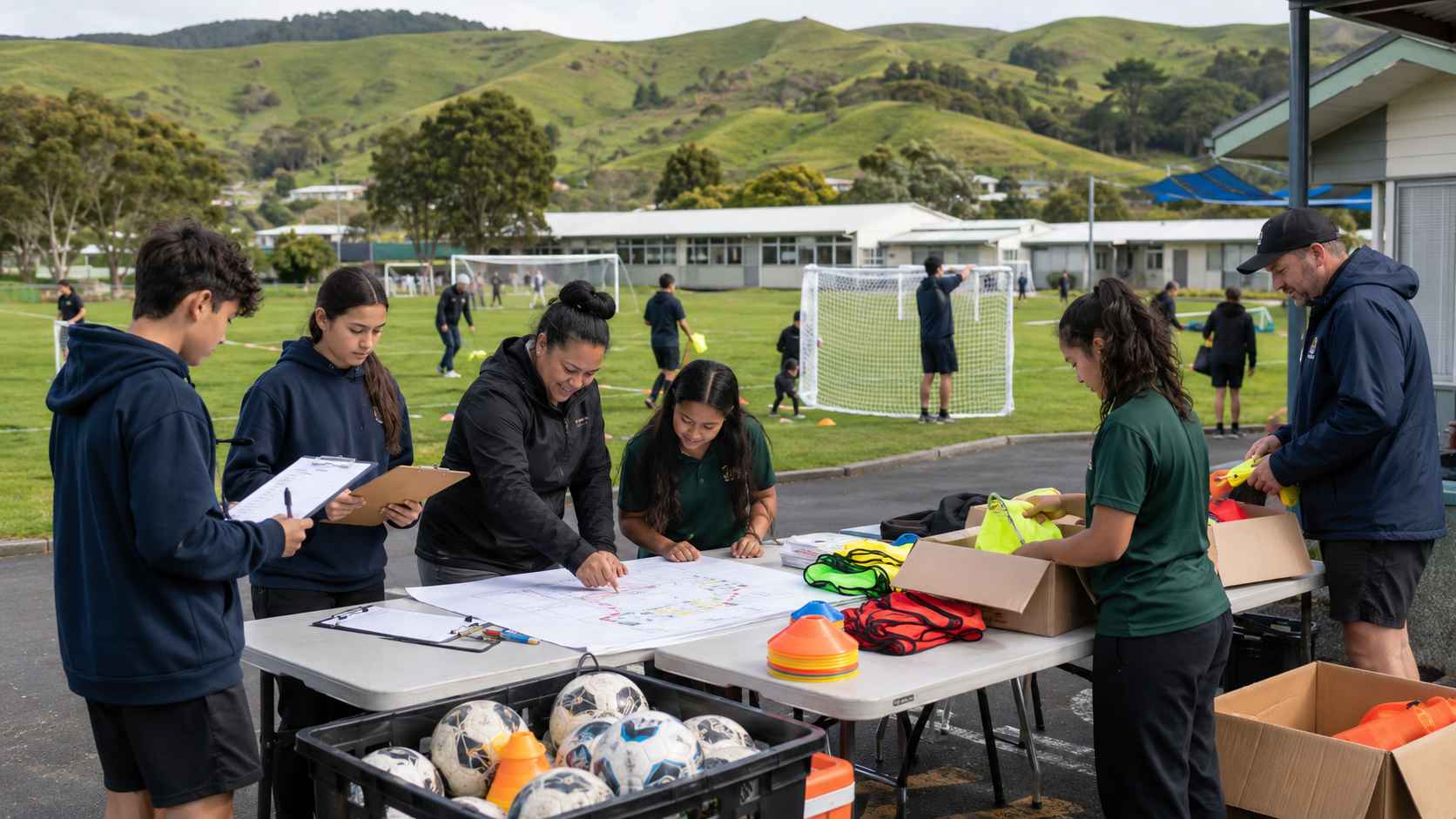
Plan and Deliver a World Cup Festival
Plan and Deliver a World Cup Festival was one of the event-focused learning themes in Kōtuitui Sport. It explored how a World Cup-style festival could be planned, organised and delivered as a shared school or community event.
The theme moved the learning journey from discussion into action. After exploring culture, identity, football, futsal, hosting and global connection, students were encouraged to think about what it would take to organise their own event.
Within the wider learning experiences, this theme followed naturally from Manaakitanga – Hosting a World Cup. Hosting had introduced the cultural and practical responsibilities of welcoming others. Planning and delivering a festival turned those responsibilities into concrete tasks.
Planning as part of the learning journey
Kōtuitui Sport treated event planning as a learning experience in itself. A festival or tournament does not happen by accident. It requires preparation, timing, people, equipment, safety planning, communication and flexibility.
The theme asked students to think about what needed to happen before, during and after a World Cup-style event. This included practical jobs, cultural processes, risk management, invitations, clean-up and the responsibilities of different people involved.
In this way, planning became a way to understand teamwork, organisation and shared responsibility.
Pōwhiri and welcome
One part of the theme focused on pōwhiri and the process of welcome. Students were encouraged to think about what would happen if visiting players, teams or guests were welcomed into a local setting.
This connected the event with tikanga, manaakitanga and the cultural meaning of hosting. A welcome was not treated as a decorative opening. It was part of how people enter a shared space respectfully and with recognition of local context.
This part of the learning connected closely with Whakapapa and Tūrangawaewae, where place, belonging and cultural grounding were explored earlier in the programme.
Before, during and after
The theme also encouraged students to think in stages. A successful event depends on what happens before the day, what happens during the event and what happens after everyone has left.
Before the event, people may need to organise teams, roles, equipment, spaces, schedules, invitations, weather plans and safety checks. During the event, they may need to manage people, games, timing, visitors, risks and communication. After the event, they may need to clean up, reflect, thank people and consider what was learned.
This structure helped students understand that event delivery is a process. It is not only about the visible moment of the festival, but the full cycle of preparation, action and follow-up.
Risk, impact and probability
Risk planning was a central part of the theme. Students were encouraged to think about what could go wrong, how likely different risks were and what impact those risks could have.
This included practical risks such as bad weather, injuries, missing equipment, access problems or confusion around roles. It also included the need to reduce, eliminate or isolate risks where possible.
Kōtuitui Sport used this as a way to connect event planning with responsibility. A festival should be enjoyable, but it also needs to be safe, organised and thoughtful.
This connected with Rights and Responsibilities, where rules, roles, fairness and shared obligations were explored through both sport and society.
Inviting the community
The theme also included the idea of invitation. A World Cup-style festival was not only an activity for students. It could also involve whānau, guests, helpers, schools, kura, clubs and the wider community.
Students were encouraged to think about what information people would need before attending an event. This could include the time, place, day, weather plan, purpose of the event and any practical needs connected to hosting.
This made the theme closely connected to Community Connections, where local people, places, clubs and shared stories formed part of the wider learning journey.
From global tournament to local festival
The FIFA Women’s World Cup 2023 provided the large-scale example behind this theme. A global tournament involves complex planning, many teams, many venues and many people working behind the scenes.
Kōtuitui Sport translated that idea into a school or community context. Students could look at the World Cup and then consider what a smaller festival would require in their own setting.
This created a connection between international sport and local action. The same broad ideas of preparation, welcome, safety, roles and shared celebration could be understood at different scales.
Preparing for participation
Plan and Deliver a World Cup Festival also prepared the final part of the Kōtuitui Sport learning journey. Once the event had been planned, students could think about how they would participate, contribute and bring the learning together on the day.
That final stage appeared in Participating in Your Own World Cup Festival, where the focus shifted toward match day activity, presentations, media roles and shared celebration.
The planning theme therefore acted as a bridge between learning about the World Cup and taking part in a locally created version of it.
Why this theme mattered
Plan and Deliver a World Cup Festival mattered because it turned the ideas of Kōtuitui Sport into practical organisation. Students were not only learning about culture, identity and sport. They were also thinking about how to create an event that reflected those ideas.
The theme showed that festivals and tournaments depend on people working together. They require planning, safety, communication, care, responsibility and respect for everyone involved.
Through this theme, Kōtuitui Sport used the World Cup as a model for local action. A major international tournament became a way to understand how communities can plan, host and celebrate together.